
Table of Contents
You’ve been there. You walk into the shop feeling good, flip through your phone for five seconds, land on a picture of Michael B. Jordan or some random TikTok dude with a crispy sides, and you say the six most dangerous words in barber history: “Yeah, just something like this, bro.”
Ten minutes later the cape comes off and you’re staring at a haircut that looks like your head got in a fight with a lawnmower and lost. The sides are too short, or not short enough, or the blend looks like stairs, or the whole thing just sits weird on your skull. You smile, tip anyway, and spend the next three weeks wearing hats.
The problem isn’t the barber half the time. It’s that we speak different languages. You say “fade” and picture something clean and gradual and sexy. He hears “fade” and thinks about the last ten clients who all wanted something completely different. One wanted it bald to the crown, another wanted barely any skin showing. Same word, totally different haircut.
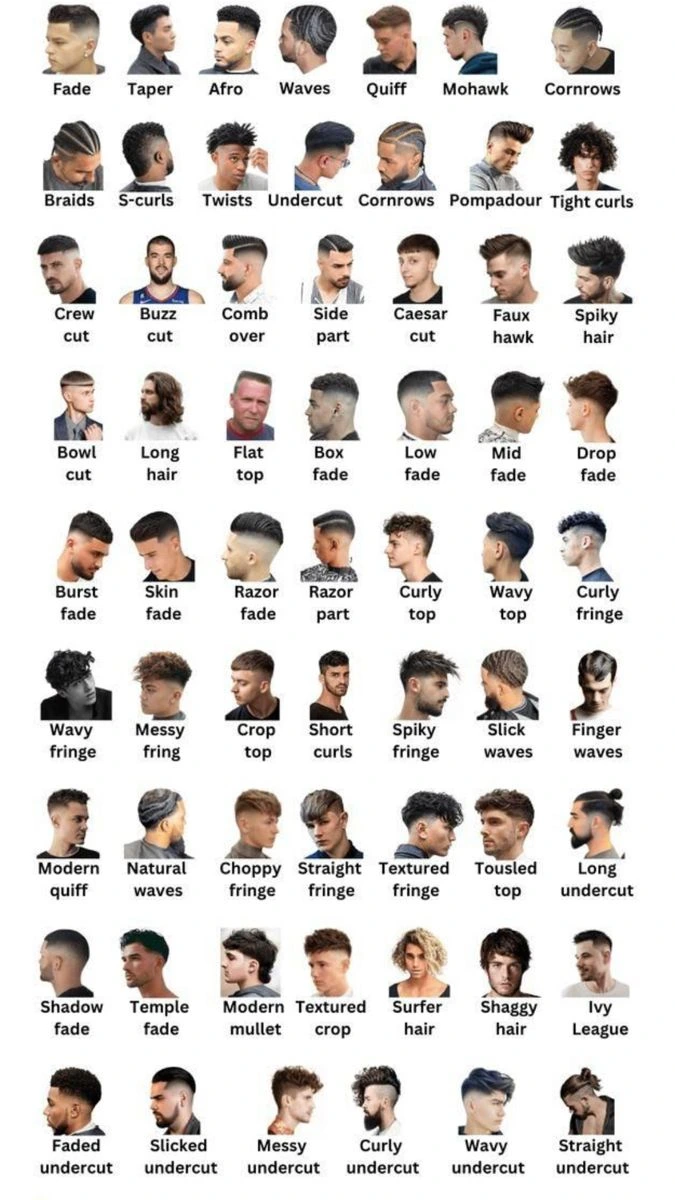
That’s exactly why every guy needs a real taper types of fades chart in his camera roll. Not some blurry meme from 2018, but an actual map that shows where each fade starts, how high it climbs, and what it actually looks like when the barber isn’t posing for the ‘gram with perfect lighting.
Because once you understand the difference between a low fade that kisses the top of your ear and a high fade that starts damn near your temples, you stop gambling with your hairline. You stop hoping. You start knowing.
I’ve watched grown men almost cry in my chair when they finally see the chart and realize they’ve been asking for the wrong thing for years. One guy told me he thought “mid fade” meant medium length on the sides the whole time. Nah, king. It’s about where the fade begins, not how short it goes. So if you’re tired of walking out the shop doing mental math about how many weeks until this grows out, stay with me. We’re about to pull the curtain all the way back.
Why the barber’s secret language of numbers and names actually matters
Walk into any decent shop and the conversation flips to code real quick. The barber spins you away from the mirror, grabs the clippers, and casually asks, “What are we doing today? Number two on the sides fading up? Or you want that zero skin bald into a three?
If you freeze like a deer in headlights, congratulations, you just joined the club. Most guys nod along and pray. Meanwhile the barber already decided for you because silence means default mid fade with a two on top.
Here’s the decoder ring nobody hands you at the door. Those guard numbers are everything. A zero is bald, no guard, straight razor or foil shaver territory. A half guard or 0.5 is that shadow you see two days after a skin fade. One guard leaves about an eighth of an inch, dark but tight. Two guard sits at a quarter inch, the length most guys chicken out at. Three guard and up starts looking like a taper instead of a true fade.
Then come the names: low, mid, high, skin, drop, burst, temp. Each one tells the barber exactly where to start fading and how aggressive to get. Say low fade and he begins the blend right above your ear. Ask for high and that blend kicks off near the corner of your forehead, exposing maximum skull. Same numbers, totally different canvas.
Get this wrong and even the best barber on the planet can’t save you. I’ve seen dudes ask for a low fade with a zero, thinking it would stay conservative, then panic when their sides disappear to the skin. Others beg for high fades thinking it looks hard, then realize their lumpy head shape turns it into a helmet.
Once you speak the language, the game changes. You stop hoping the barber roulette lands in your favor and start directing the cut like you actually own the head it’s sitting on. That little bit of knowledge turns a gamble into a guarantee. And trust me, the difference feels better than any haircut high you’ve ever had.
The master taper types of fades chart you wish you had years ago
Imagine a clean, no-BS wall chart hanging in the shop that actually makes sense. No fancy filters, no weird angles, just eight clean heads lined up side by side, each one showing exactly where the fade starts, how fast it disappears, and what the final shape looks like from the front, side, and back. That’s what we’re building right now in words (and you can screenshot this whole thing later).
Starting from the bottom left and moving right, here’s the real taper types of fades chart every phone needs in 2025:
Classic Taper: No skin at all. Starts just above the ear and gently shortens down to the natural hairline with a 3 blending into a 1. Clean, office-safe, grows out like a gentleman.
Low Fade: Skin or shadow starts about an inch above the ear. The fade begins low and slow, keeps most of the weight on the sides, and still looks polished three weeks later. Think Ryan Reynolds in almost any movie.
Low Skin Fade: Same starting point as the low, but the bottom inch is taken to bald with a foil shaver. The contrast pops harder, yet it’s still forgiving if your head isn’t perfectly round.
Mid Fade: The people’s champion. Fade kicks off right at the top of the ear, usually with a 0 or 0.5 at the bottom blending up into a 2 or 3. Balanced, modern, works with curls, waves, straight hair, everything.
Mid Drop Fade: Same mid height, but the fade line curves down behind the ear instead of staying level. Makes round faces look longer and gives the neck a sharper V.
High Fade: Aggressive. Fade starts at the temples or slightly above. Leaves a tiny island of length on top and exposes the whole parietal ridge. Military roots, streetwear soul.
High Skin/Bald Fade: High fade taken all the way to zero with the razor. The lineup glows. Think peak Mbappé or prime Cristiano.
Temp/Burst Fade: Only around the ears and sideburns, the rest stays longer. Looks like a mohawk had a baby with a Caesar. Curly and coily hair guys live here.
That’s the actual chart. Eight boxes, zero confusion. Save it, stare at it, send it to your barber before you even booking the seat. Next time someone asks what you want, just flash the picture and say “third from the left, skin version.” Watch how fast the whole shop respects you.
Low fade: the safe bet that still looks sharp as hell
The low fade is the haircut equivalent of a navy suit. You can wear it anywhere, it never offends, and somehow it still turns heads. The magic is in the placement: the shortest length starts barely above the ear and the blend climbs slowly, so even when it grows out it just looks like a fresh taper.
Oval and longer face shapes love this one because it keeps width without chopping the height. Square jaws soften up. Round faces can pull it off if the top stays tall and textured; otherwise you risk looking like a lightbulb.
Celebrities who made it famous? Old-school Brad Pitt, current Timothée Chalamet when he wants to look clean, and pretty much every Premier League footballer who isn’t trying to go full rockstar.
The best part is forgiveness. Screw up the booking and end up with a low fade instead of a mid? You’ll still look good walking out. Ask for a zero low fade and your barber pushes it half an inch higher than planned? Still fire. It’s the only fade you can get in a random strip-mall spot while traveling and not sweat the result.
One pro tip nobody says out loud: pair a low fade with a hard part or a surgical line and suddenly the “safe” cut looks custom as hell. It’s the quiet guy at the party who secretly has the best stories.
Mid fade: the Goldilocks zone everybody secretly loves
If barbers had a default setting, this is it. Not too low that your mom freaks out, not too high that your boss side-eyes you on Monday. The mid fade starts right around the top of the ear or where the side of your head starts to curve, giving you perfect balance.
Why does every second guy on Instagram rock a mid fade? Because it works with literally every top: pompadours, crops, curls, messy fringe, even long hair tied back. The fade does the heavy lifting so the top can be as wild or as neat as you feel that day.
Face-shape cheat code: round faces go taller on top with a mid fade to stretch things out. Diamond or heart shapes keep the top narrower so the wide cheekbones stay the star. Oval faces just sit back and collect compliments.
The tiny tweak that separates average from elite is the starting guard. Ask for a 0.5 mid fade instead of a straight zero and you get that soft shadow that lasts longer and photographs richer. Or push it to a 1-guard mid fade for a more gradual, European vibe that grows out like a dream.
I’ve cut thousands of mid fades and the ones people brag about months later always had one thing in common: the barber spent an extra four minutes blending with a 1.5 guard that nobody else bothers with. That half-guard ghost line is the secret sauce.
High fade: bold, clean, and zero room for error
High fades are the haircut steroids. They make your top look thicker, your jaw sharper, and your whole silhouette taller. But they also expose every lump, scar, and weird cowlick you’ve been hiding since middle school.
The fade line sits at or above the temples, sometimes creeping into the round of the head. That means the transition from skin-to-length happens fast and high, leaving a dramatic contrast. Think old-school Marine cut that discovered fashion.
Best on oval and square faces with strong bone structure. Round faces can try, but only if the top is super tall and forward; otherwise you’ll look like an upside-down egg. Longer faces sometimes find high fades make them look like light bulbs with legs.
Modern twist blowing up right now: the high fade with a textured crop or a curly mop on top. The extreme contrast makes 3 inches of hair look like 6. Barbers in London and LA charge extra for these because the blend has to be flawless; one dark spot and the whole thing is ruined.
If you’re going high, commit to maintenance. You’re back in the chair every 10-12 days or the magic dies. But when it’s fresh? You walk different. Confidence on ten. Just don’t blame me when strangers start asking for your barber’s IG.
Skin/bald fade: when you want the lineup to hit different
This is the nuclear option. The fade goes all the way to skin, usually with a straight razor or foil shaver, creating a gradient so clean it looks airbrushed. No shadow, no stubble, just pure scalp into hair.
The starting height can be low, mid, or high, but the bottom is always zero. That razor line glows under sunlight and makes any top style look twice as sharp. Kylian Mbappé, LeBron off-season, every rapper dropping a summer single; they all live here.
Reality check: skin fades are brutal on sensitive scalps. First three days you might get bumps or razor burn if your barber rushes the shave. And the grow-out is unforgiving; day five you’ve got a dark helmet line unless you hit it with a foil every morning.
Pro move: ask for a “skin fade with a soft shadow” at the very bottom. The barber leaves the lowest quarter inch at a 0.5 instead of full bald, so it grows out smoother and hides ingrowns. Looks almost identical fresh, but saves your skin.
One more thing: lighting is everything. Under shop LEDs a skin fade looks perfect. Step outside in natural light and it looks photoshopped. That’s the flex.
Temp fade: the underrated sidekick stealing the show
The temp fade (short for temple fade) only blasts the area around your ears and sideburns into skin or shadow, leaving the back and crown longer. It’s like someone took scissors to a mohawk but got bored halfway.
Curly and coily textures worship this cut because the burst around the ears makes tight curls pop like 3D. Round faces love it because the narrow sides stretch everything out. Plus, you can grow the top crazy long and still look intentional.
Big in the Afro-Latino and hip-hop scenes right now. Think prime Big Sean or any SoundCloud rapper with sponge curls. The temp fade lets the texture do the talking while keeping the edges lethal.
Maintenance is a breeze; you only really need a cleanup around the ears every couple weeks. The rest just grows into itself. If you’ve ever been scared of full fades but wanted something sharper than a taper, the temp fade is your gateway drug.
Drop fade: the one that makes your jawline pop on camera
The drop fade is the regular fade’s cooler cousin who showed up late wearing sunglasses. Instead of the fade line staying level around the head, it literally drops down behind the ear in a smooth arc, creating a lower point at the nape.
That little curve is pure cheat code. It lengthens round faces, sharpens soft jawlines, and makes beards connect like they were drawn on by an artist. TikTok and Instagram Reels went nuts over drop fades in 2023-2024 and the wave still hasn’t crashed.
Most popular version right now is the mid drop skin fade with curly or wavy top. The drop creates a perfect frame for the face and the curls spill over like they’re defying gravity.
One warning: cheap barbers mess this up constantly. The arc has to be symmetrical or you’ll look lopsided for a month. Always ask “Can you do a clean drop?” before you sit down. If they hesitate, run.
Burst fade: the mohawk’s cooler, less-tryhard cousin
The burst fade is what happens when a temp fade and drop fade have a baby on creatine. The skin or shadow explodes out from behind the ear in a semi-circle, like the sun rising over your sideburns, while the top stays disconnected and proud.
Made legendary by the curly community (sponge curls + burst fade = instant hall of fame), but straight hair guys are catching on with textured crops and mullet hybrids.
The burst gives insane width at the temples, so diamond and heart-shaped faces look more balanced. Square faces can rock it if the top stays soft; otherwise it turns into Lego man territory.
Hardest part for barbers is keeping the circle perfect. One slip and it looks like a bite was taken out of your head. When it’s right, though? You don’t need jewelry. The haircut is the chain.
Taper fade vs classic taper: the fight nobody talks about
Here’s the beef everyone pretends doesn’t exist. Half the shops in America call a classic taper a “taper fade” and charge you extra for it. Real talk:
A true fade goes to skin or near-skin at the bottom with a visible gradient. A classic taper never touches skin; it shortens gradually down to maybe a 1 or 2 at the hairline, always leaving hair.
Taper fade = contrast, edge, lineup culture. Classic taper = country clubs, weddings, your uncle who still gets the same cut since 1998.
You can have a low taper fade (skin low, then gradual) or a low classic taper (no skin, scissor work mostly). The second one grows out better and feels softer, but it doesn’t pop in photos the same way.
Pick taper fade if you want the jawline sharp and the vibe current. Pick classic taper if you have to look respectable in an office or courtroom next week. Both are valid, just don’t let anyone overcharge you for scissors work and call it a fade.
Matching your fade to your face shape (no more square peg regrets)
Oval: You won the lottery. Everything works. Have fun. Round: Go mid or high, keep the top tall and square, add angles. Drop and burst are your friends. Square: Low or mid fade to soften the jaw, textured top, no hard lines. Diamond/Heart: High or temp/burst to widen the forehead, keep sides tight. Long/Oblong: Low fade only, keep top wide and full, never go high or you’ll look like Slender Man.
Quick test in the mirror: pull all your hair back. Whatever shape stares back at you, pick the fade that does the opposite of what nature gave you. Too wide? Go higher. Too long? Go lower and fuller on the sides. Balance is the whole game.
How to actually ask for it without sounding clueless
Walk in, pull up the chart on your phone, point, and say: “Mid drop skin fade, starting with a zero, blend up to a two, crop top with texture and a low hard part on the left.”
Or keep it dead simple: “Number three from the left on that taper types of fades chart, skin version, leave the top four inches.”
Bring two or three reference photos from different angles. If the barber says “I got you” without asking questions, leave. A real one will ask about your cowlick, how fast your hair grows, and whether you want the nape rounded or squared.
Red flags:
- “We don’t do numbers here.”
- “Just sit down, I know what you want.”
- Won’t let you see the back with a hand mirror.
Green flags:
- Pulls out his own phone to match your reference exactly.
- Talks about face shape before touching clippers.
- Mentions the 1.5 guard for the ghost line.
The 2025 updates nobody’s telling you about yet
Right now in the top shops:
- Textured skin fades where the top is heavily cropped but the skin fade stays mirror clean.
- Shadow fades that stop at a 0.5 instead of full bald for that permanent two-day-growth look.
- V-nape skin fades that carve a sharp V at the neck for open-collar season.
- Comb-over skin fades with hard parts so precise they look tattooed.
The new wave is contrast with control. Everyone’s tired of the same blown-out mid fade. Guys want razor lines that last, textures that move, and fades that shift depending on the angle. Keep your eyes open; half these cuts aren’t even named yet.
Your next move: screenshot this before your appointment
You now own the clearest taper types of fades chart on the internet. Eight clean styles, face-shape hacks, exact words to say, and every trick that turns a $30 cut into a $100 vibe.
Save the whole thing. Make a folder called “Hair” and never walk into a shop blind again. Or just bookmark this complete 2025 men’s haircut encyclopedia that updates every season – it’s what most barbers secretly use. Next time you sit down, you’re not asking for a haircut. You’re ordering exactly what you came for. Now go get lined up, king. The chair’s waiting.
FAQ: Taper Types of Fades Chart
Taper vs fade – what’s the actual difference?
ATaper never hits skin, just gets gradually shorter. Fade always goes to skin or near-skin with a sharp gradient.
Which fade grows out the cleanest?
Low fade, easy. You can push it almost a month and it still looks good.
I’ve got a big forehead or thinning crown – what should I stay away from?
High fades and burst fades. They expose everything. Stick to low or mid with the top brushed forward.
Do skin fades and burst fades look weird on straight or fine hair?
Not at all. Straight hair often shows the blend even sharper. They’re blowing up on Asian and Caucasian guys right now.
How do I stop razor bumps after a skin/bald fade?
Tell your barber “single-pass foil only,” slap on Tend Skin that night, and hit it with witch hazel for three mornings. Zero bumps, guaranteed.


